
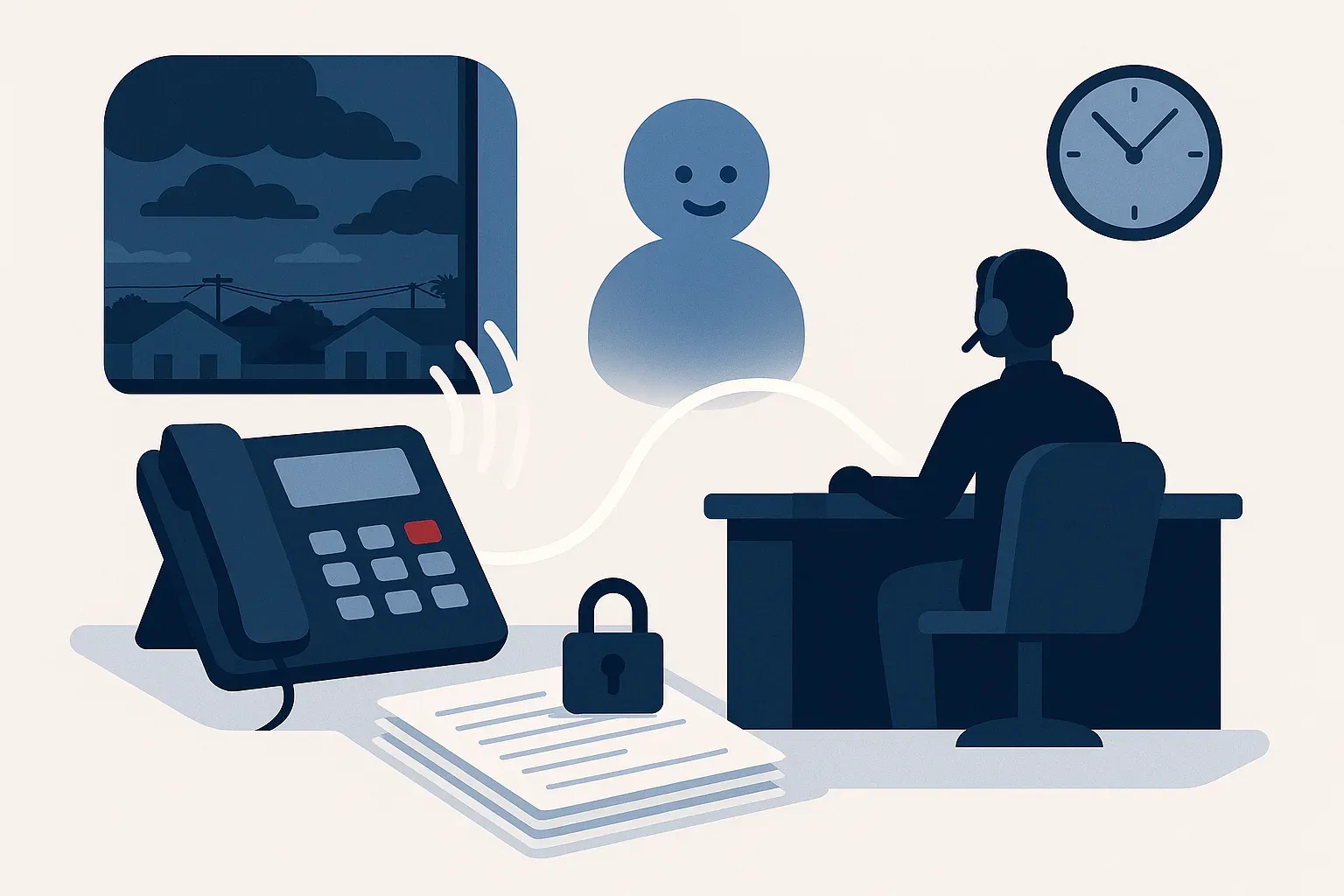
When a hailstorm or a stretch of 100-degree days hits the Houston area, the phones at a small HVAC or roofing company in La Porte don't stop ringing. Many of the calls are the same three questions. The rest are the ones that turn into jobs. Miss those, and the customer calls the next company on the list.
That's the problem AI phone assistants promise to solve. Today's systems can hold a spoken conversation, understand what a caller wants in plain language, and take care of simple requests without a person picking up. For some businesses that's a real help. For others it's an expensive way to annoy customers. Here's how to tell which camp you're in.
Look at your calls before you look at products
Pull a week or two of call records, or have whoever answers the phone keep a tally sheet. Sort every call into rough buckets:
- Quick and predictable: hours, directions, "do you service Deer Park," "are you taking new patients"
- Scheduling: new appointments, reschedules, cancellations
- Status checks: "is my technician still coming today," "did you get my paperwork"
- Everything else: complaints, quotes, emergencies, anything with money or emotion attached
If most of your volume lands in the first three buckets, automation may free up real time. If most of it lands in the last one, an AI receptionist will mostly be passing calls back to people, and your customers will feel the delay.
Timing matters too. Plenty of small businesses don't need AI during office hours at all. The bigger win may be nights, weekends, the lunch hour, and storm days, when calls would otherwise roll to voicemail.
Decide where the robot stops
The best setups have a clear handoff. Before you sign anything, write down the rules:
- Which requests the assistant handles on its own
- Which situations send the call straight to a person: an emergency, a billing dispute, an upset caller, anything medical or legal
- What happens after hours when nobody is available, such as a message, a callback promise, or an on-call number
- How quickly someone follows up on what the assistant collected
Then test it yourself. Call in, get frustrated on purpose, ask something odd, talk over it with road noise in the background. If you can't reach a human easily, neither can your customers.
It's also good practice to tell callers up front that they're talking with an automated assistant. People are more forgiving of a machine that's honest about being one.
Ask hard questions about the data
An AI phone system hears everything callers say and often records and transcribes it. Many connect to your calendar, customer list, or scheduling software. That means the system is handling personal information and, for some businesses, regulated information. A Pasadena medical practice, for example, has to think about patient privacy rules before letting any outside service collect symptoms or insurance details.
Questions worth asking any provider:
- Where are recordings and transcripts stored, and for how long?
- Who at the vendor can listen to them?
- Is caller data used to train their AI, and can you opt out?
- Will they sign the agreements your industry requires, such as a business associate agreement in healthcare?
- What access does it need to your other systems, and how is that connection secured?
- How do you get your data back, or deleted, if you leave?
If the answers are vague, keep shopping. And if you work in a regulated field, fold these questions into your broader compliance program rather than treating the phone system as a separate project.
Start small and measure
Don't flip the whole phone line over on day one. Pick one narrow job, like after-hours scheduling or answering your five most common questions, and run it for a month. Listen to a sample of calls each week. Track missed calls, bookings, and complaints before and after, then decide whether to widen it.
Watch for the practical details that trip systems up. Does it handle local street names, different accents, and the terms your trade uses? Does it pass complete details to your team, or does someone end up calling every customer back anyway?
Where we fit in
We don't have a favorite phone product to push. What we do is help Houston-area businesses look at how a new tool connects to email, calendars, and customer data, and whether it opens any security gaps along the way. If you're weighing an AI assistant and want a practical second opinion, book a discovery call.